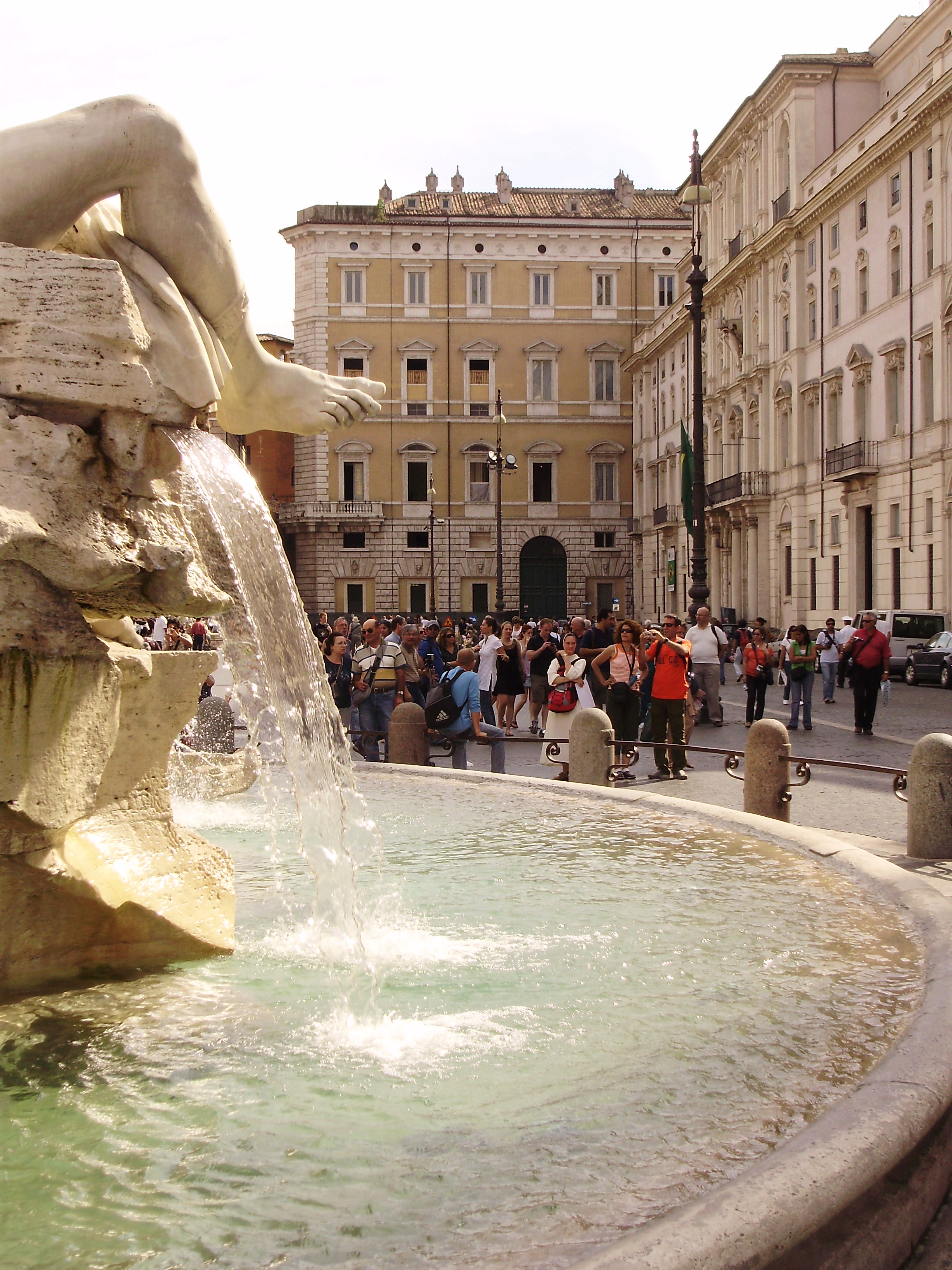
Palazzo Braschi is a large Neoclassical palace in Rome, and is located between the Piazza Navona, the Campo de' Fiori, the Corso Vittorio Emanuele II and the Piazza di Pasquino. It presently houses the Museo di Roma, the civic museum of Rome.It was built by the papal nephew Duke Luigi Braschi Onesti, to designs by Cosimo Morelli.
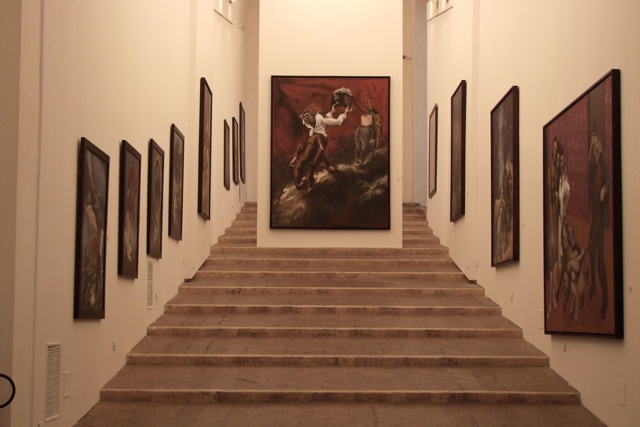
The main entrance is on Via San Pantaleo (between Piazza Navona and Corso Vittorio Emanuele). The oval hall inside the main entrance overlooks Via San Pantaleo, and leads to the monumental staircase with its eighteen red granite columns which came from the gallery built by the Emperor Caligula on the banks of the River Tiber. Decorating the staircase there are ancient sculptures and fine stuccoes by Luigi Acquisti inspired by the myth of Achilles.
The architect Giuseppe Valadier designed the chapel on the piano nobile or first floor.
Palazzo Braschi is a lavish palazzo overlooking Piazza Navona, which is now home to the Museum of Rome.
 The Museo di Roma has a vast collection dedicated to the history of the city from the Middle Ages to the early twentieth century. Only part of this assortment of drawings, paintings, sculptures, frescoes, costumes etc. is on display at any one time. There is an eclectic feel to the display, which is rather like a book whose text is missing, leaving only the illustrations.
From busts of popes to paintings of peasants, the different human experiences of Rome are illustrated through the stately rooms of Palazzo Braschi. One of the oddest exhibits is a sequence of portraits (1667-1669) of a young scion of the Rospigliosi family (Pietro Banchieri), obviously the apple of his aristocratic family's eye, dressed up in a range of costumes: a dancer, Cupid, a Swiss Guard and even a lady. There is more than a trace of a fed-up expression on the poor boy's face.
Some of the most interesting exhibits are the large scenic paintings of Rome, showing grand events. The artists have carefully included hundreds of small details of the crowd: the nobles in their carriages, the cardinals in all their finery, the youths who may be about to pick the pocket of a distracted gentleman.
Palazzo Braschi itself is a solid and elegant palace dating to the eighteenth century, with a grand staircase boasting red granite columns once belonging to Caligula. The building's original frescoes can still be seen in many of the rooms of the museum.
Palazzo Braschi is on Via San Pantaleo (between Piazza Navona and Corso Vittorio Emanuele). Entrance costs €6.20. An English audio guide is available for hire; note that the museum's labelling is only in Italian.
The Museo di Roma has a vast collection dedicated to the history of the city from the Middle Ages to the early twentieth century. Only part of this assortment of drawings, paintings, sculptures, frescoes, costumes etc. is on display at any one time. There is an eclectic feel to the display, which is rather like a book whose text is missing, leaving only the illustrations.From busts of popes to paintings of peasants, the different human experiences of Rome are illustrated through the stately rooms of Palazzo Braschi. One of the oddest exhibits is a sequence of portraits (1667-1669) of a young scion of the Rospigliosi family (Pietro Banchieri), obviously the apple of his aristocratic family's eye, dressed up in a range of costumes: a dancer, Cupid, a Swiss Guard and even a lady. There is more than a trace of a fed-up expression on the poor boy's face.
Some of the most interesting exhibits are the large scenic paintings of Rome, showing grand events. The artists have carefully included hundreds of small details of the crowd: the nobles in their carriages, the cardinals in all their finery, the youths who may be about to pick the pocket of a distracted gentleman.
Palazzo Braschi itself is a solid and elegant palace dating to the eighteenth century, with a grand staircase boasting red granite columns once belonging to Caligula. The building's original frescoes can still be seen in many of the rooms of the museum.
Palazzo Braschi is on Via San Pantaleo (between Piazza Navona and Corso Vittorio Emanuele). Entrance costs €6.20. An English audio guide is available for hire; note that the museum's labelling is only in Italian.